 how-to
Are Fitness Podcasts Scientifically Accurate? A Practical Guide
Last Updated: October 29, 2026
Quick Summary
Fitness podcasts are not scientifically accurate by default, because the format rewards confidence over caution and compresses nuanced studies into sound bites. You can verify any claim in about ten minutes by capturing it exactly, finding the primary study on PubMed, reading the abstract and limitations, and comparing the authors' conclusion to what the host said.
- A single study is a data point, not a verdict, until other teams replicate it.
- A host who says studies prove without naming the study is usually repeating something secondhand.
- Score episodes out of 12; below five means treat them as entertainment, not guidance.
- Systematic reviews and meta-analyses of randomized controlled trials sit at the top of the evidence hierarchy.
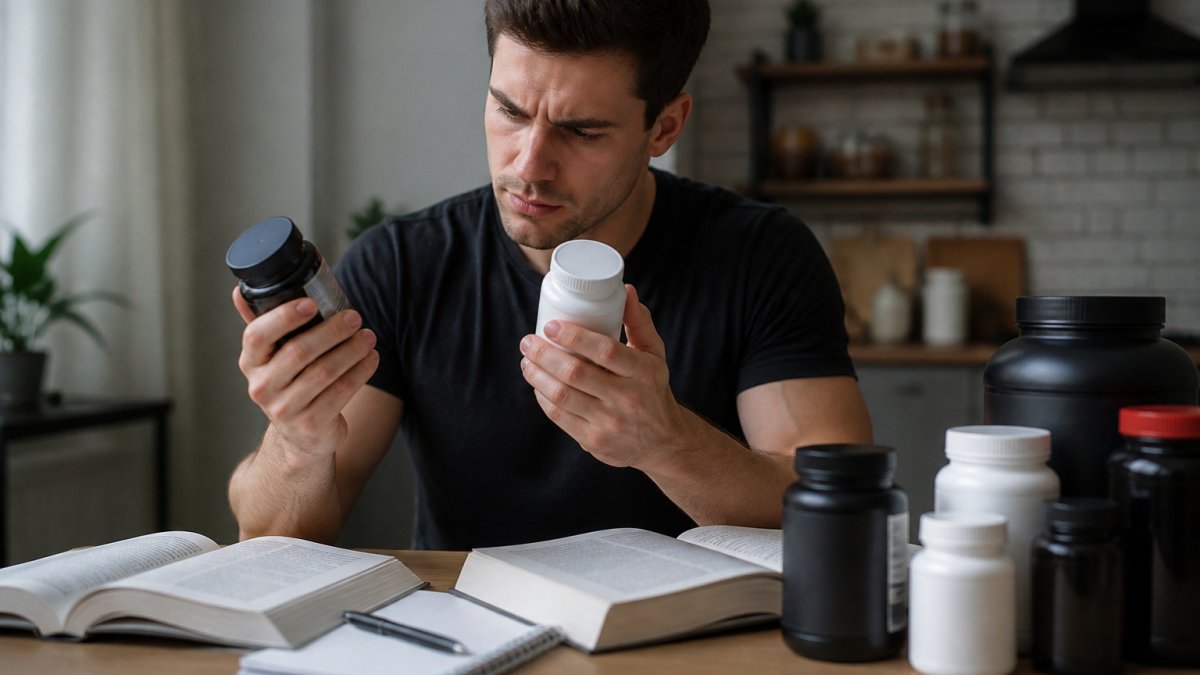
- The FDA does not review supplements for effectiveness before sale, so treat supplement hype with caution.
Table of Contents
- Why Fitness Podcasts Get Science Wrong So Often
- How to Evaluate Fitness Advice in Any Episode
- How to Fact-Check Health Claims Against Primary Research
- Spotting Fitness Podcast Misinformation Before It Spreads
- A Practical Checklist for Scoring a Fitness Podcast Episode
- Build Your Own Evidence-Based Fitness Library
- Frequently Asked Questions
Why Fitness Podcasts Get Science Wrong So Often
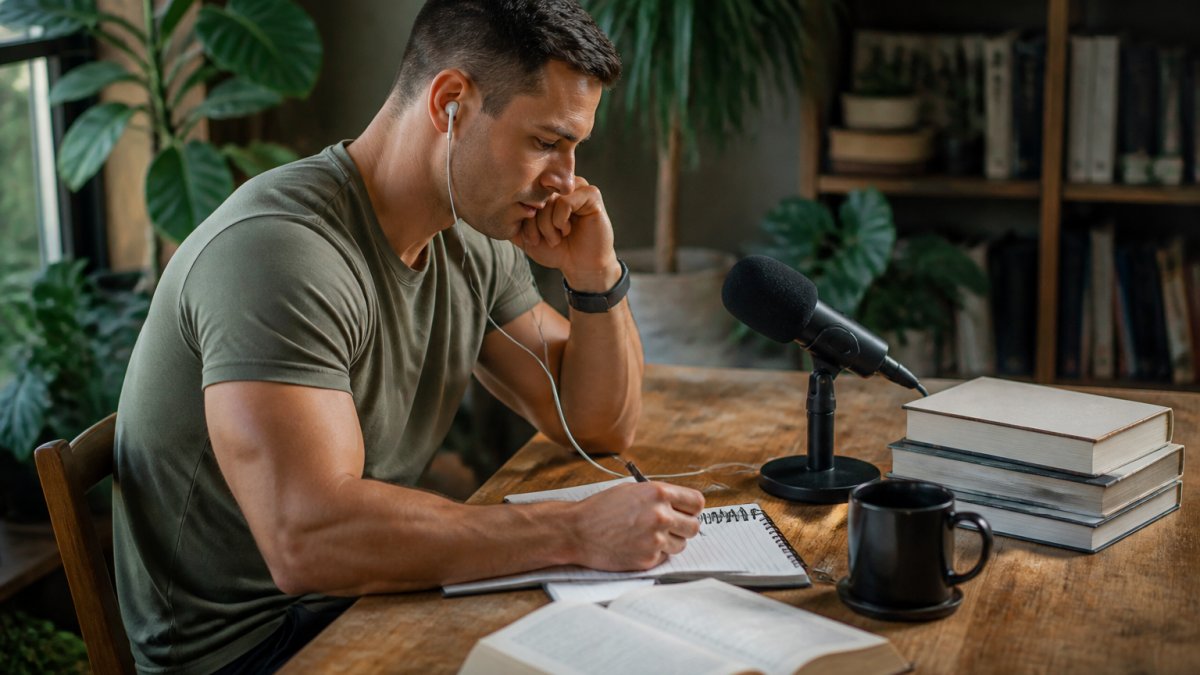
Fitness podcasts are not scientifically accurate by default. Some are excellent. Many are not. The format rewards confidence over caution, and that is the root of the problem.
Here is the core tension: a podcast is entertainment built on authority, while science is a slow process built on doubt. Those two things fight each other.
The Gap Between a Study and a Sound Bite
A single study is a data point, not a verdict.
What survives the compression? The headline. What gets dropped?
A common mistake listeners make is treating one study as settled fact. In practice, science works through replication.
Watch out: a host who says "studies prove" without naming the study is usually repeating something they heard secondhand.
When Expertise Is Real and When It Is a Costume
Credentials matter, but they are easy to fake or stretch. A host with a nutrition degree is not automatically an expert on strength training. A former athlete is not a researcher.
Ask three questions:
- What is this person actually trained in?
- Do they cite sources, or just assert?
- Do they ever say "I don't know"?
That third one is the tell. Real experts admit uncertainty because they understand how much is still unknown. People performing expertise never do.
How to Evaluate Fitness Advice in Any Episode
Evaluating fitness advice means checking four things: who is speaking, what they claim, whether they cite a source, and whether that source supports the claim. If any link breaks, the advice is unproven.
Below, we will show you exactly how to run that check in under ten minutes per episode.
Start with the claim itself. Write it down word for word.
Next, look for the source. A good host names the journal, the year, and ideally the authors.
Then check the source against the claim. This is where most podcasts fail.
Our own methodology explains how we vet every source we cite, if you want to see the standard applied end to end.
How to Fact-Check Health Claims Against Primary Research
Fact-checking a health claim means going to the original study, not a summary of it. Primary research is the actual paper. Everything else is someone's interpretation.
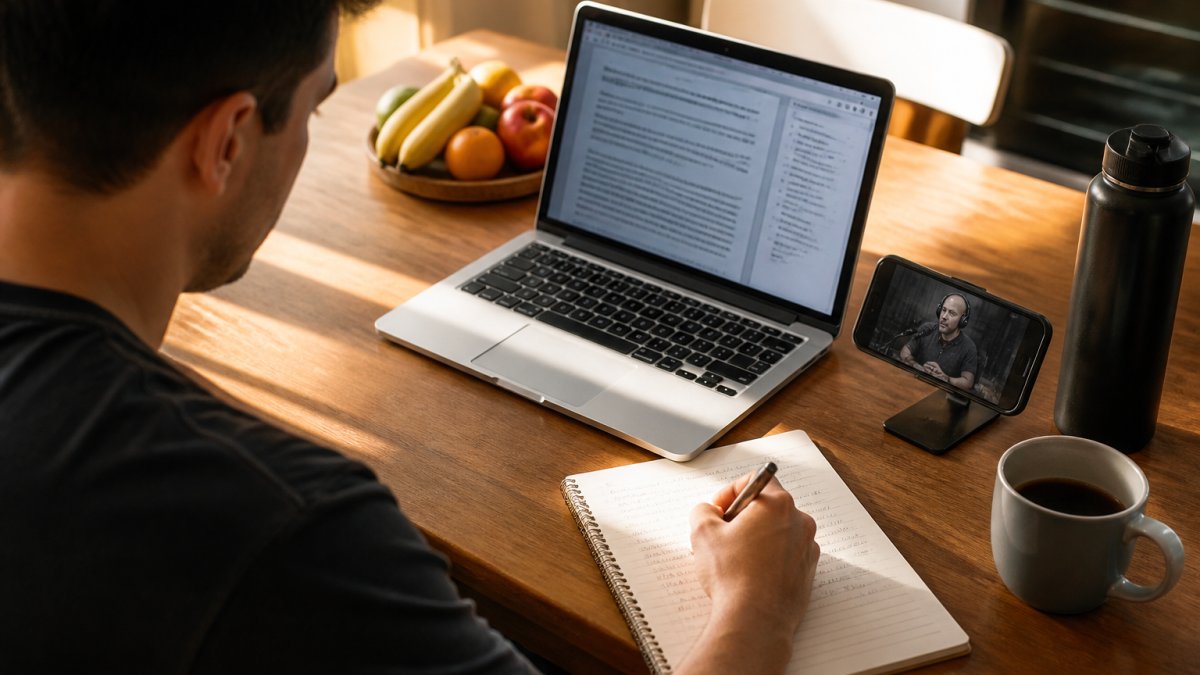
Step 1: Capture the claim exactly as stated
Write it down word for word. Vague claims like "train this way for better results" cannot be checked. Specific claims like "this rep range builds more muscle" can. Note the population, the outcome, and the timeframe the host implies.
Step 2: Find the primary study
Search the study title on PubMed, the US National Library of Medicine database. Most abstracts are free to read. If the host never named a study, search the key terms plus "systematic review" or "meta-analysis" to see what the evidence base actually looks like.
Step 3: Read the abstract for four things
- Population: Who was studied? Trained athletes, untrained beginners, older adults, mice?
- Sample size: A study of 14 people is a signal, not a verdict.
- Design: Randomized controlled trial, observational cohort, cross-sectional survey, or animal study? Design determines how much weight the finding can bear.
Step 4: Read the limitations and funding
Read the conclusion, then read the limitations. If the authors list ten caveats and the podcast mentioned none, you have found a gap. Check who funded it. Industry-funded studies are not automatically wrong, but you should know. The Cochrane Handbook is a solid reference for how to judge study quality and risk of bias.
Step 5: Compare the claim to the conclusion
This is where most podcasts fail. A study might show an effect in untrained beginners over eight weeks. The host applies it to everyone, forever. Ask: does the paper's own conclusion match the sentence the host said? If the host says "proven" and the authors say "promising," that is a distortion.
Step 6: Look for conflicting evidence
Search the same topic and see if other studies disagree. If they do, the honest answer is "it depends," not a confident one-liner. A quick way to gauge the state of the field is to look for a recent systematic review or meta-analysis, which summarizes many studies at once.
Our own methodology explains how we vet every source we cite, if you want to see the standard applied end to end.
Spotting Fitness Podcast Misinformation Before It Spreads
Misinformation in fitness podcasts usually follows recognizable patterns. Learn the patterns and you will spot it fast. But red flags alone are not enough. You also need a way to judge how strong the evidence behind a claim actually is.
The common red flags
- Certainty about complex topics. Nutrition and training are messy. Anyone with zero doubt is selling something.
- Anecdotes dressed as evidence. "It worked for me" is a story, not a study.
- Cherry-picked studies. Citing only research that supports the claim while ignoring the rest.
Judge the evidence quality, not just the claim
Not all evidence is equal. A useful mental hierarchy, from strongest to weakest:
- Systematic reviews and meta-analyses of randomized controlled trials
- Randomized controlled trials
- Observational cohort studies
- Cross-sectional surveys and case reports
- Expert opinion and anecdote
A host citing a single small trial is not wrong to mention it, but it should be labeled as preliminary. A host citing a meta-analysis is on firmer ground. Ask which level the claim sits at.
Watch for association presented as causation
A common distortion is turning a correlation into a cause. Observational studies can show that people who do X tend to have outcome Y, but that does not prove X caused Y. Confounders, sleep, diet, income, training history, can explain the link. If a host says "doing X causes Y" based on an observational study, that is an overreach.
Understand uncertainty and replication
Science works through replication. One finding means little until other teams confirm it. Sample size matters: small studies produce noisier results. And limitations are normal, a paper that admits its weaknesses is more trustworthy than one that claims none. A host who never says "we don't know yet" is not describing science; they are describing certainty.
Separate accurate information from useful personal experience
A coach's story can be genuinely helpful. It just is not proof. Label it correctly and you can use both. The question is not "is this true for everyone?" but "is this presented as evidence or as experience?"
Learn the patterns and you will spot misinformation fast, but pair the patterns with an evidence hierarchy and you will also know how much weight to give the claims that survive.
Not all evidence is equal, so here is the hierarchy to weigh a claim against.
| Evidence level | Strength |
|---|---|
| Systematic reviews and meta-analyses of randomized controlled trials | Strongest |
| Randomized controlled trials | Strong |
| Observational cohort studies | Moderate |
| Cross-sectional surveys and case reports | Weak |
| Expert opinion and anecdote | Weakest |
A Practical Checklist for Scoring a Fitness Podcast Episode
Use this checklist to score any episode. Give one point per box checked. A score under 5 means treat the episode as entertainment, not guidance.
Source and Evidence
- Host names specific studies, journals, or researchers
- Claims are matched to the population actually studied
- Limitations and conflicting evidence are mentioned
Credibility
- Host's actual training and expertise are clear
- Host admits when something is unknown or debated
- Opinions are labeled as opinions, not facts
Accuracy Red Flags
- No "studies prove" without a named study
- No single study treated as settled fact
- No supplement or product claims without disclosure of interest
Practical Use
- Advice includes who it is for and who it is not for
- Anecdotes are clearly marked as personal experience
Score it out of 12. Nine or above is strong. Five to eight is mixed. Below five, be skeptical.
Build Your Own Evidence-Based Fitness Library
A library beats a feed. Podcasts disappear into an archive. A curated set of cited resources stays with you and lets you check claims yourself.
Start with these habits:
- Keep a running list of claims you want to verify
- Save primary sources, not summaries
- Revisit topics when new research appears
This is where a structured collection saves time. You can also browse the full catalogue of evidence-based books, programs, and cookbooks to build your own reference set.
At The Sequeira Library, every title cites its sources, every opinion is labeled as one, and there are no subscriptions or recurring payments.
Frequently Asked Questions
Are science-based fitness podcasts more reliable than influencer podcasts?
Often yes, but the label alone proves nothing. A podcast that names its sources and links to peer-reviewed research gives you something to check, while an influencer episode usually offers only personal results. Still verify: a show can call itself science-based and still cherry-pick studies. Look for cited studies, disclosed conflicts of interest, and hosts who describe study limitations rather than hiding them. Reliability comes from transparency, not from the word science in the show notes.
Do fitness podcasts cite peer-reviewed research?
Some do, many do not. When a host cites research, note whether they name the journal, the study design, and the population studied. A claim like a randomized controlled trial in trained adults carries more weight than an observational survey. If no citation appears, treat the claim as an opinion. You can search PubMed or Google Scholar for the topic yourself and compare what the study actually found with what the episode said.
How can you check a health or fitness claim you hear on a podcast?
Write the claim down word for word, then search for the primary study rather than a summary article. Read the abstract, the methods, and the limitations section. Ask three questions: who was studied, how large was the sample, and did the authors themselves call the result preliminary? If the study is small, short, or in animals, the podcast overstated it. Cross-check with a second independent study before changing your training or nutrition.
What are common signs of misinformation in fitness podcasts?
Watch for absolute language such as always, never, or the only way, claims that one food or exercise fixes everything, and anecdotes presented as proof. Other red flags include missing citations, dismissing all conflicting evidence as flawed, and selling a supplement alongside the advice. Legitimate experts say what the evidence shows and where it is uncertain. If an episode never admits uncertainty, that is your signal to fact-check before acting.
The real challenge is not finding more fitness content. It is knowing which content to trust. That takes a standard, and a place to check claims against real research. The Sequeira Library gives you 97 evidence-based titles, each with cited sources, a complete audiobook, and lifetime access after a single purchase. Get started with The Sequeira Library and build a fitness library you can actually verify.